Elmira Jackals: seventeen seasons of hockey at First Arena, UHL to ECHL
Elmira Jackals hockey ran for seventeen seasons: the United Hockey League from 2000, the ECHL from 2007, and a final year in 2016-17. This is what the club did, who played for it, and what the words on the broadcast meant.
Section one
The club
How the Elmira Jackals began
The club played its first game on 14 October 2000, away at the B.C. Icemen, and lost it 4-1. First Arena was still being finished, so the club opened with ten games on the road. The first home game came on 11 November in front of 3,378 people, and the Jackals won it 5-2 against the Knoxville Speed. They finished second in the Northeast Division under Todd Brost, reached the playoffs and were named franchise of the year.
The second season was the best of the early run. A 45-21-8 record was the strongest in the Eastern Conference and carried the club to the Colonial Cup Finals, where the Muskegon Fury won the series in six games. Two years later the Jackals reached the finals again from a losing regular-season record, and Muskegon beat them again, this time in four.
Hockey at First Arena
Every home game the club played was at First Arena on North Main Street, a 3,784-seat building with two ice surfaces and thirty-one luxury suites. It opened with the team in 2000 as the Coach USA Center and took the First Arena name in 2004. The arena was sold in March 2017, and the club announced that the season then in progress would be its last. The team played in that one building and nowhere else.
The UHL years and the move to the ECHL
The Jackals spent seven seasons in the United Hockey League and ten in the ECHL. joining the ECHL in 2007 brought a new logo, a new coach in Steve Martinson and an immediate return to the playoffs after three years away. The strongest ECHL season was 2011-12 under Pat Bingham: 95 points, more than any other club in the Eastern Conference, and a second-round exit against the team that went on to win the Kelly Cup. Elmira Jackals hockey ended with three seasons outside the playoffs.
Section two
Season by season
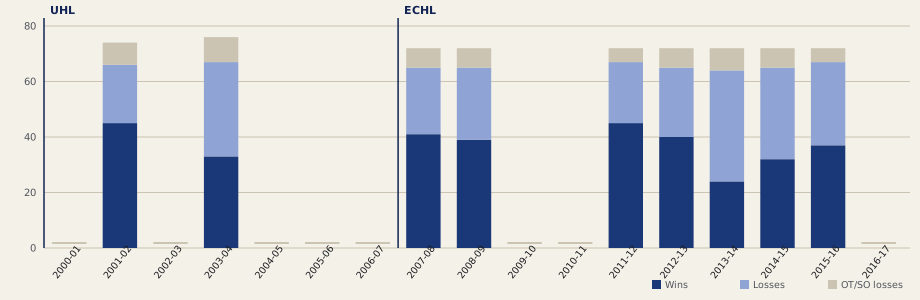
| Season | League | W | L | OTL/SOL | Playoffs |
|---|---|---|---|---|---|
| 2001-02 | UHL | 45 | 21 | 8 | Colonial Cup Finals |
| 2003-04 | UHL | 33 | 34 | 9 | Colonial Cup Finals |
| 2007-08 | ECHL | 41 | 24 | 7 | Lost the Conference Quarterfinals to Reading |
| 2008-09 | ECHL | 39 | 26 | 7 | Lost in the second round |
| 2011-12 | ECHL | 45 | 22 | 5 | Lost the second round to Florida |
| 2012-13 | ECHL | 40 | 25 | 7 | Lost the opening round to Florida |
| 2013-14 | ECHL | 24 | 40 | 8 | Missed |
| 2014-15 | ECHL | 32 | 33 | 7 | Missed |
| 2015-16 | ECHL | 37 | 30 | 5 | Missed |
All seventeen seasons, including the ones whose records were never published
Section three
Players
608 players are named in what the club published across the seventeen seasons. The Elmira Jackals roster is indexed alphabetically, with the season-by-season squads behind it and the published biographies from the club's own player pages where they survive.
Section four
The record
The Elmira Jackals history covers two leagues, seven head-coaching changes and affiliations with five NHL clubs. The narrative record runs from the arena's construction to the sale that ended it.
The full Elmira Jackals history
How ECHL affiliation worked, and who the Jackals were tied to
Section five
Hockey reference
The site also carries the reference material it has always been asked for: a glossary of hockey terms, from apple to zamboni, and plain answers to the questions people ask about the game itself — how long a match lasts, how many periods it runs, what happens when it is tied.
- The hockey glossary — well over a hundred terms, each with its own entry
- How long is a hockey game — periods, intermissions, overtime and shootouts
- The news archive — dated club releases from 2002 onward
Elsewhere
Where the same ground is covered
- Elmira JackalsThe encyclopaedia article on the club, with the league record and the closure.
- ECHLThe league the club played in from 2007 to 2017, still operating.
- The arena, now the LECOM Event CenterThe building on North Main Street the club played every home game in.